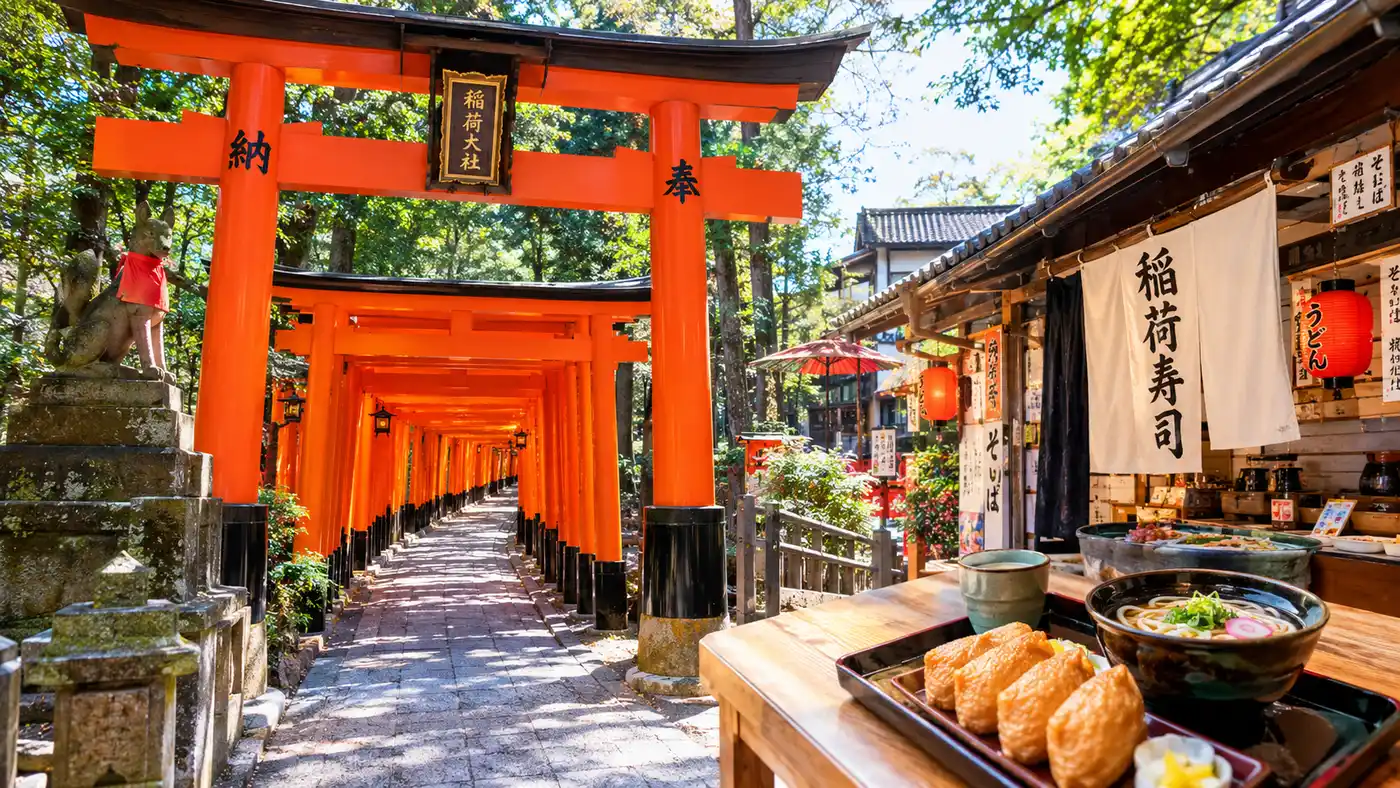
Best Food & Restaurants Near Fushimi Inari Taisha
Discover the best food and restaurants near Fushimi Inari Taisha, from street stalls to sit-down ramen, udon, and sushi …
Continue Reading →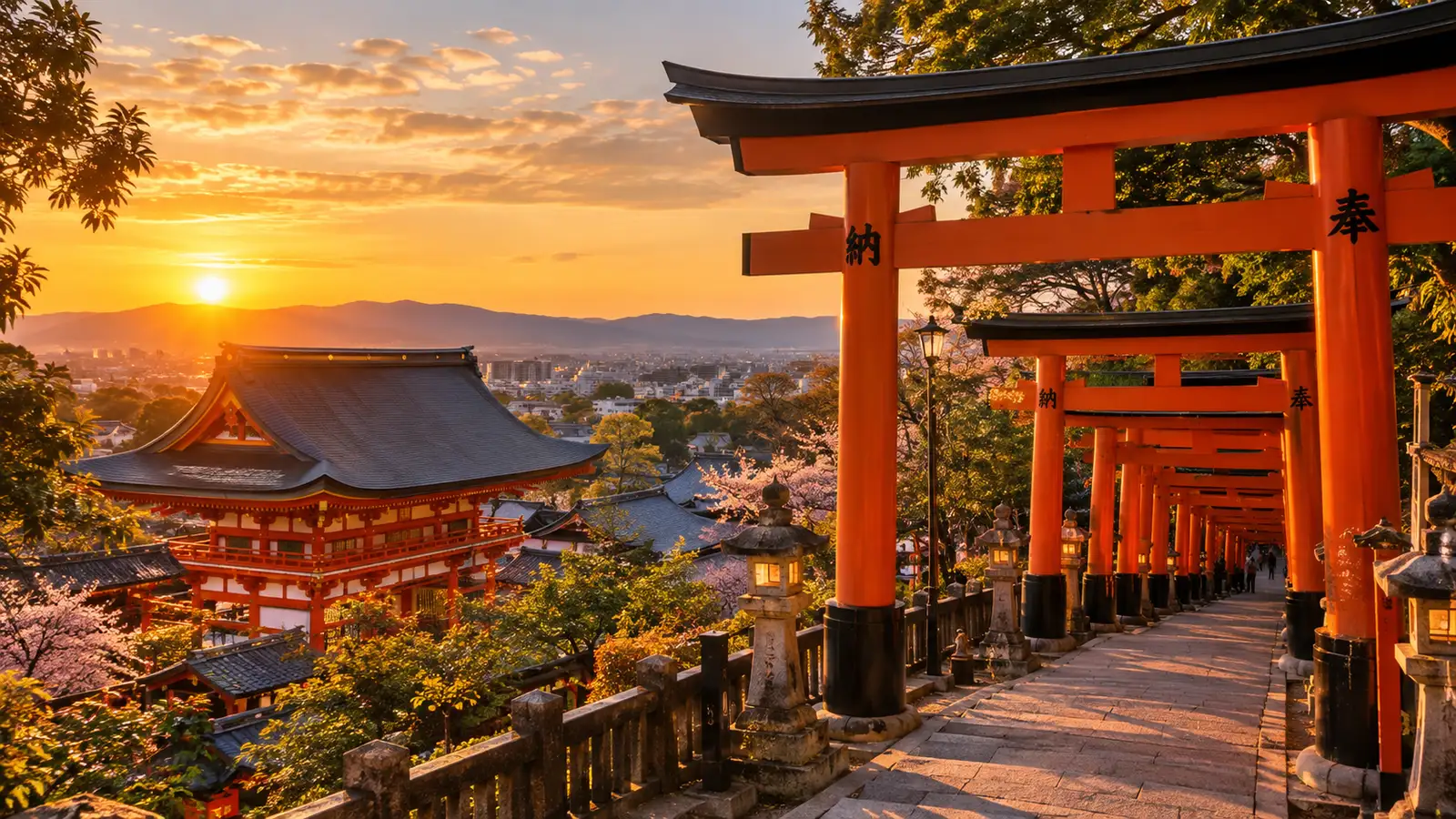
Walk the winding mountain paths lined with vibrant vermilion torii. Discover ancient spirits and breathtaking views high above Kyoto.
Discover what makes Fushimi Inari Taisha unforgettable.
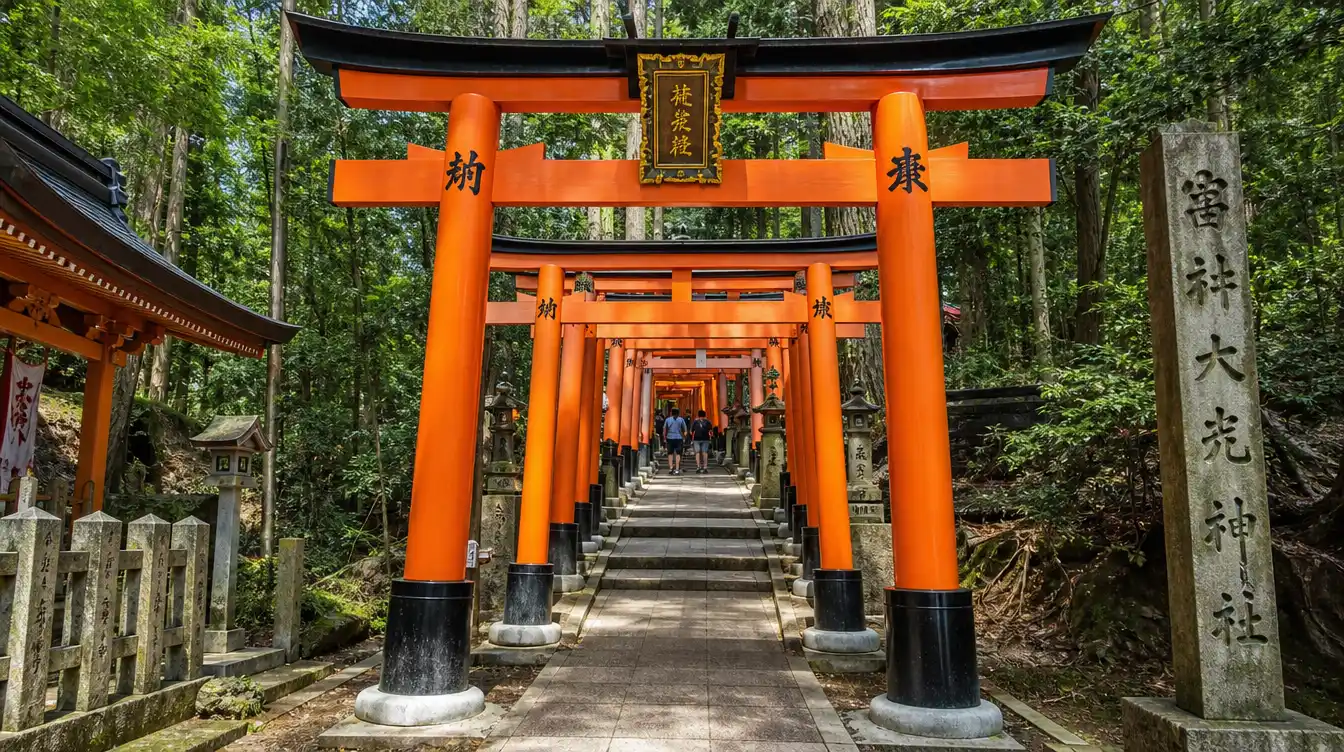
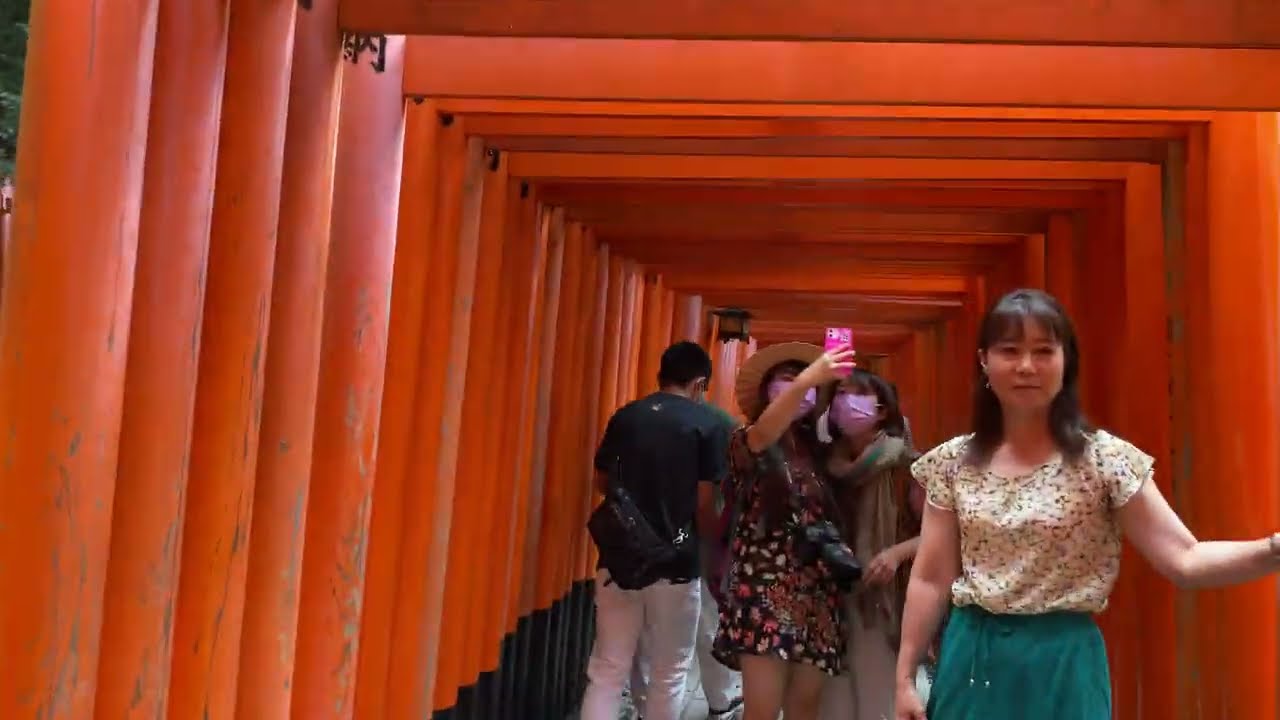
Immerse yourself in the iconic vermilion torii tunnels, a truly unique and visually stunning experience. Capture unforgettable photos as the light filters through the closely packed gates, creating a magical glow.
Learn more →
Along the mountain trails, especially around the Yotsutsuji intersection, you'll find charming teahouses. Enjoy traditional Japanese snacks like inari sushi or a refreshing green tea while taking in spectacular city views.
Learn more →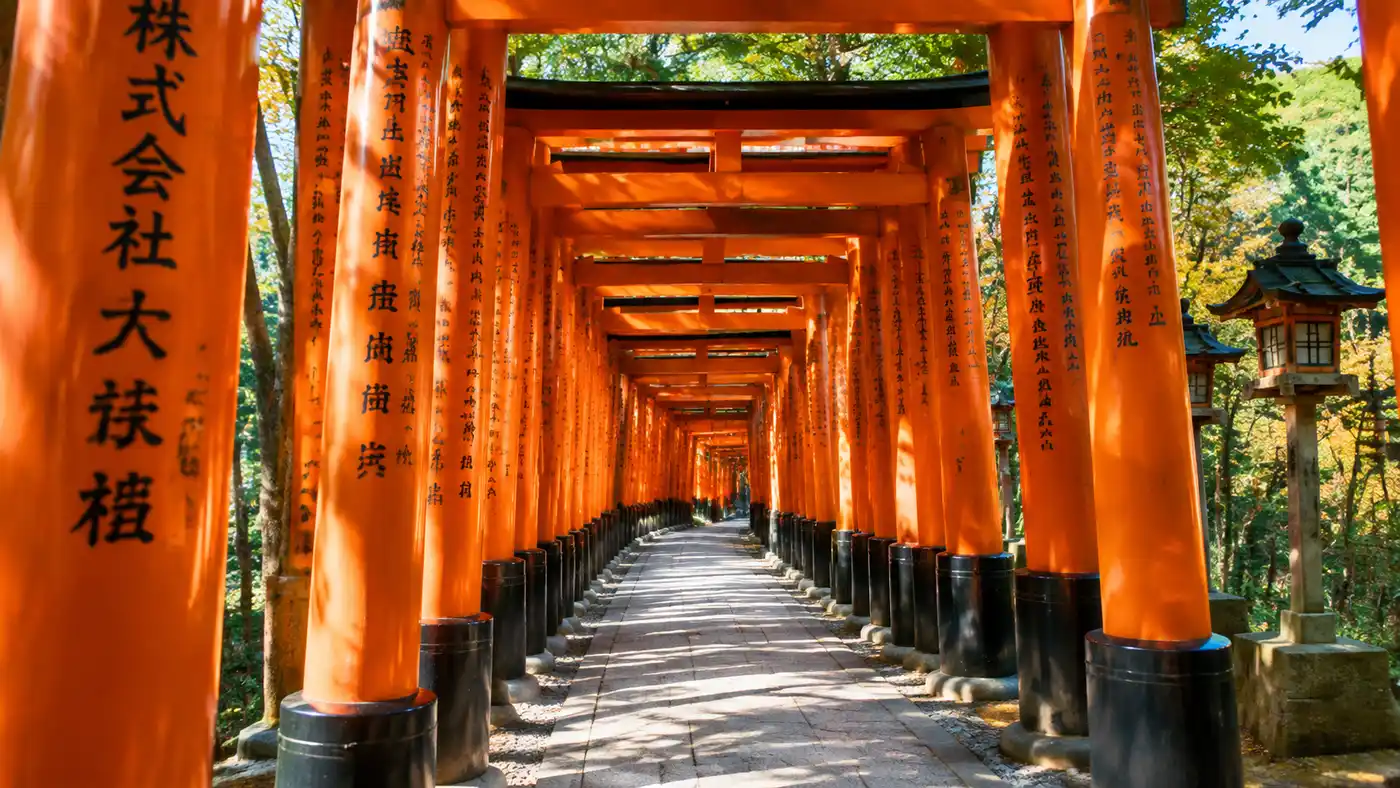
Challenge yourself with the full hike to the top of Mount Inari, offering a more serene and spiritual journey away from the main crowds. The reward is a sense of accomplishment and even more secluded shrines.
Learn more →What to expect from arrival to departure.
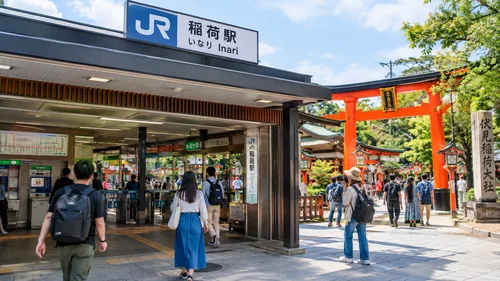
Step off the train and the grand entrance of Fushimi Inari Taisha is immediately visible, beckoning you forward.
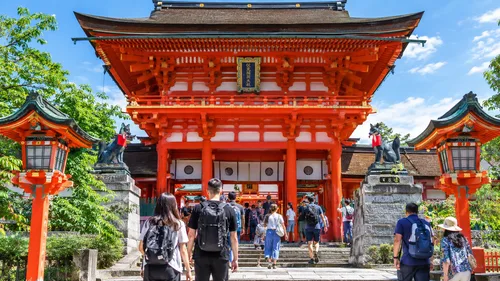
Walk through the impressive Romon Gate, a gift from Toyotomi Hideyoshi in 1589, marking your official entry into the sacred grounds.
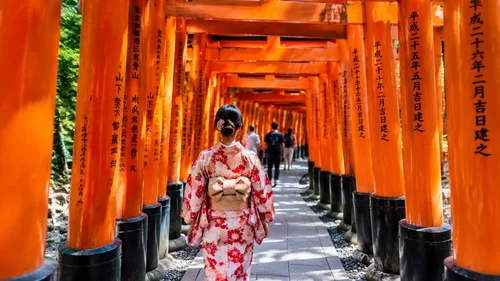
Begin your ascent into the iconic 'Thousand Gates', a breathtaking maze of vermilion tunnels that define Fushimi Inari.
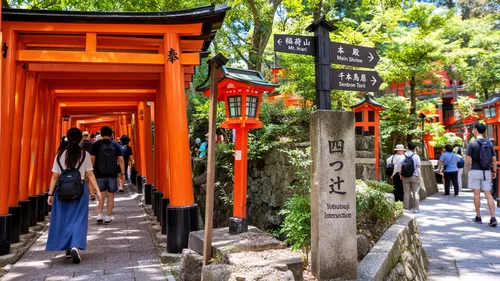
Arrive at the midpoint viewpoint, offering stunning panoramic views of Kyoto city stretching out below. This is a popular spot for photos and a short rest.
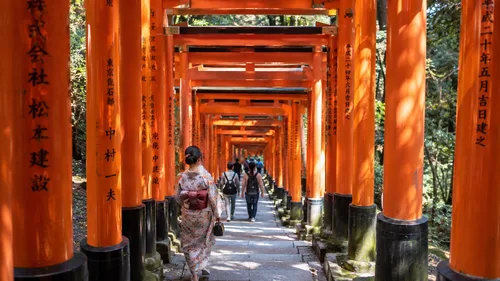
Continue beyond Yotsutsuji to discover smaller, quieter shrines and altars dedicated to various aspects of Inari Okami, often guarded by numerous fox statues.
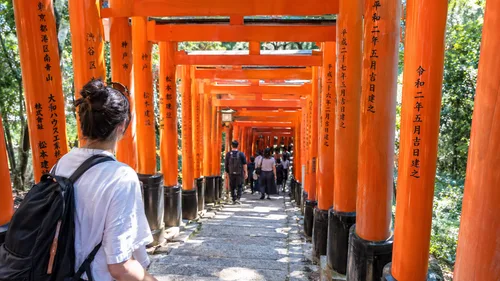
Make your way back down, perhaps taking a different path, reflecting on the unique beauty and spiritual energy you've experienced throughout your journey.
Nestled at the base of a sacred mountain in southern Kyoto, Fushimi Inari Taisha is arguably Japan's most visually striking and spiritually significant Shinto shrine. It's dedicated to Inari Okami, the deity of rice and sake, and patrons have donated thousands upon thousands of vermilion torii gates that form a mesmerizing network of tunnels up the mountainside. This isn't just a simple shrine, it's an entire world waiting to be explored.
From the moment you step through the grand Romon Gate, you're enveloped in an atmosphere of ancient mysticism and vibrant color. The main path quickly leads into the famous Senbon Torii, the 'Thousand Gates', where the tunnels begin their ascent. Each gate carries a story, a dedication from an individual or company, making your walk a continuous journey through history and devotion.
Beyond the initial crowds, the trails become quieter, revealing smaller shrines, tranquil bamboo groves, and panoramic viewpoints overlooking Kyoto. Fushimi Inari offers both a breathtaking visual spectacle and a deeply personal spiritual experience, beckoning you to wander, reflect, and discover its many secrets.
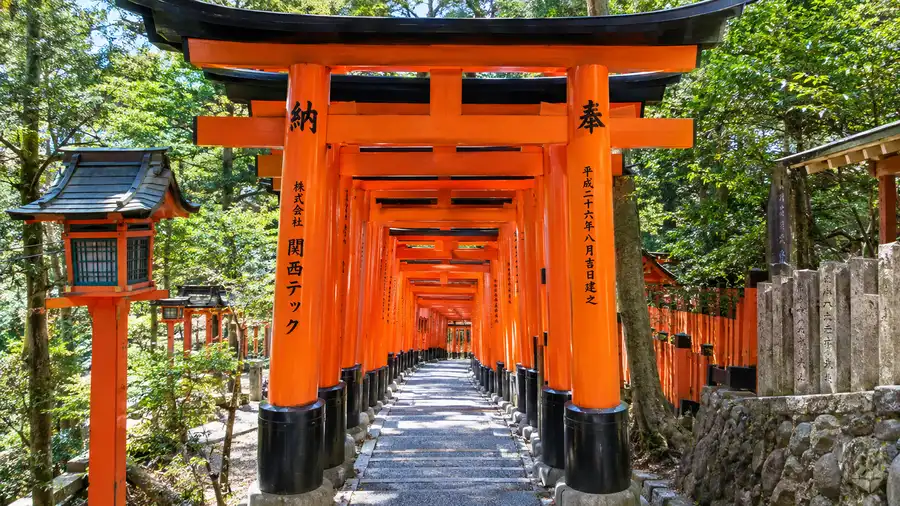
The sheer number of gates blew me away. We went at 6 AM and had the place almost to ourselves, definitely worth the early start for the quiet.
Loved the hike up, even with all the steps. The views from the midpoint were incredible, and the fox statues are so charming.
A beautiful shrine, though it gets very busy mid-day. The food stalls at the bottom are excellent, especially the grilled mochi.
Every corner offered a new photo opportunity. We spent nearly three hours exploring and still felt like there was more to see.
Compare options and book directly below.
Everything you need to know before visiting Fushimi Inari Taisha.
Hours: Open 24 hours a day, 7 days a week, year-round. The shrine office and gift shops are typically open from 9 a.m. to 5 p.m.
| Admission is free for all visitors. There are no tickets or entry fees required. Optional guided tours are available for a fee. |
📍 68 Yabunouchi-cho, Fukakusa, Fushimi Ward, Kyoto 612-0882, Japan
See it before you go.
Worth combining with your Fushimi Inari Taisha visit.
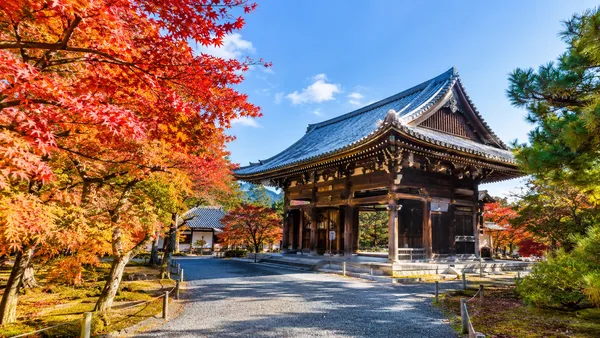
Known for its stunning autumn foliage and ancient Zen gardens, especially vibrant in late November.
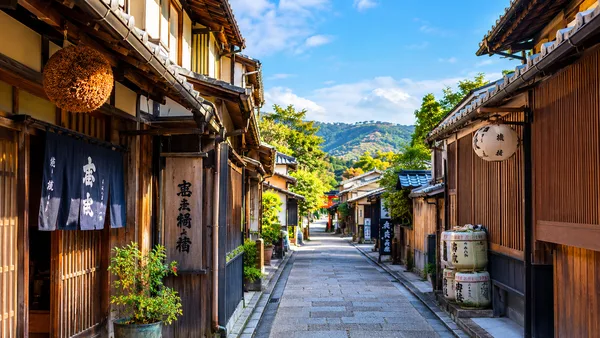
Explore traditional sake breweries, enjoy tastings, and cruise along historic canals in this charming neighborhood.

Houses a vast collection of pre-modern Japanese art and cultural artifacts, perfect for history buffs.
Fushimi Inari Taisha welcomes all visitors with accessibility features and family-friendly amenities.
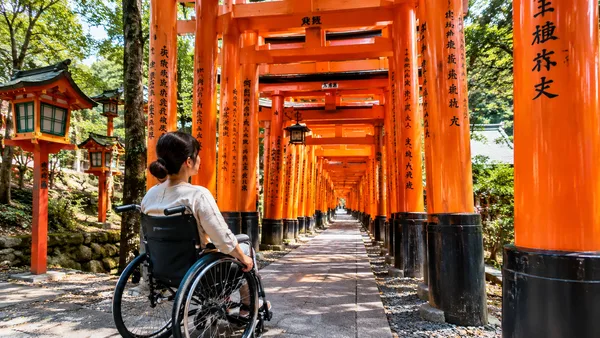
The base precinct, main hall, and the initial section of the vermillion torii gates are generally wheelchair accessible with paved paths and ramps. An elevator behind the Main Hall provides access towards the torii tunnels during limited daytime hours. However, the climb up Mount Inari involves steep stone steps and is not wheelchair-passable. Accessible toilets are available near the main entrance and parking area.
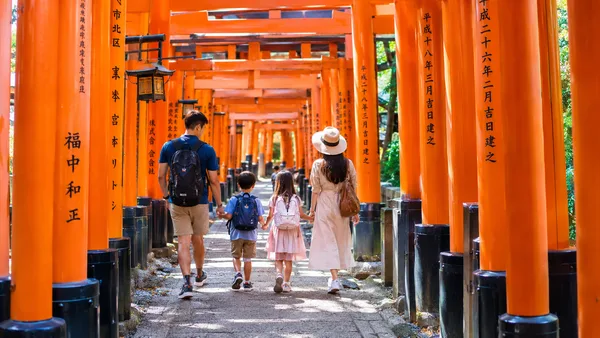
Fushimi Inari Taisha is considered family-friendly, offering opportunities for children to explore and engage with the culture, including spotting fox statues. The initial areas are suitable for strollers, but the mountain trails are not.
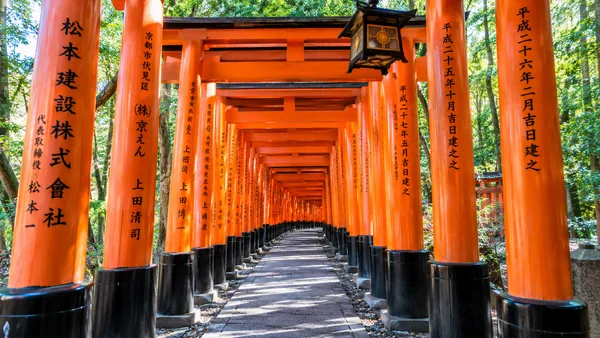
Signage throughout the shrine provides information in Japanese, English, Korean, and Chinese. Many vendors at the base also have some English proficiency.
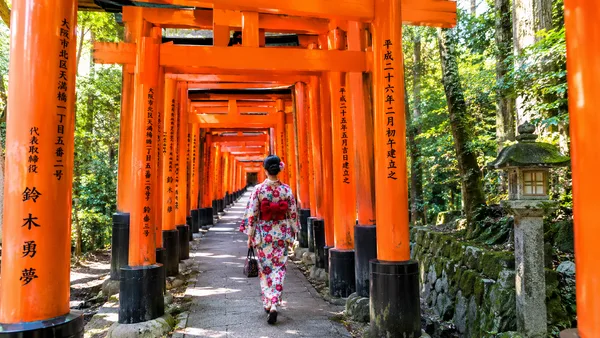
The main path up Mount Inari consists of numerous steep stone steps, making the full ascent challenging and not suitable for wheelchairs. There is an elevator located behind the Main Hall that provides access towards the torii tunnels during specific daytime hours. Some paths may have uneven surfaces or cobblestones.
Dive deeper into Fushimi Inari Taisha.
Discover the best food and restaurants near Fushimi Inari Taisha, from street stalls to sit-down ramen, udon, and sushi …
Continue Reading →
Hike the iconic Fushimi Inari Taisha trail to Mount Inari's summit. Discover tips, what to expect, and plan your fushimi …
Continue Reading →
Kyoto holds so many incredible spots, but for many, the vermilion gates of Fushimi Inari Taisha stand out as an absolute …
Continue Reading →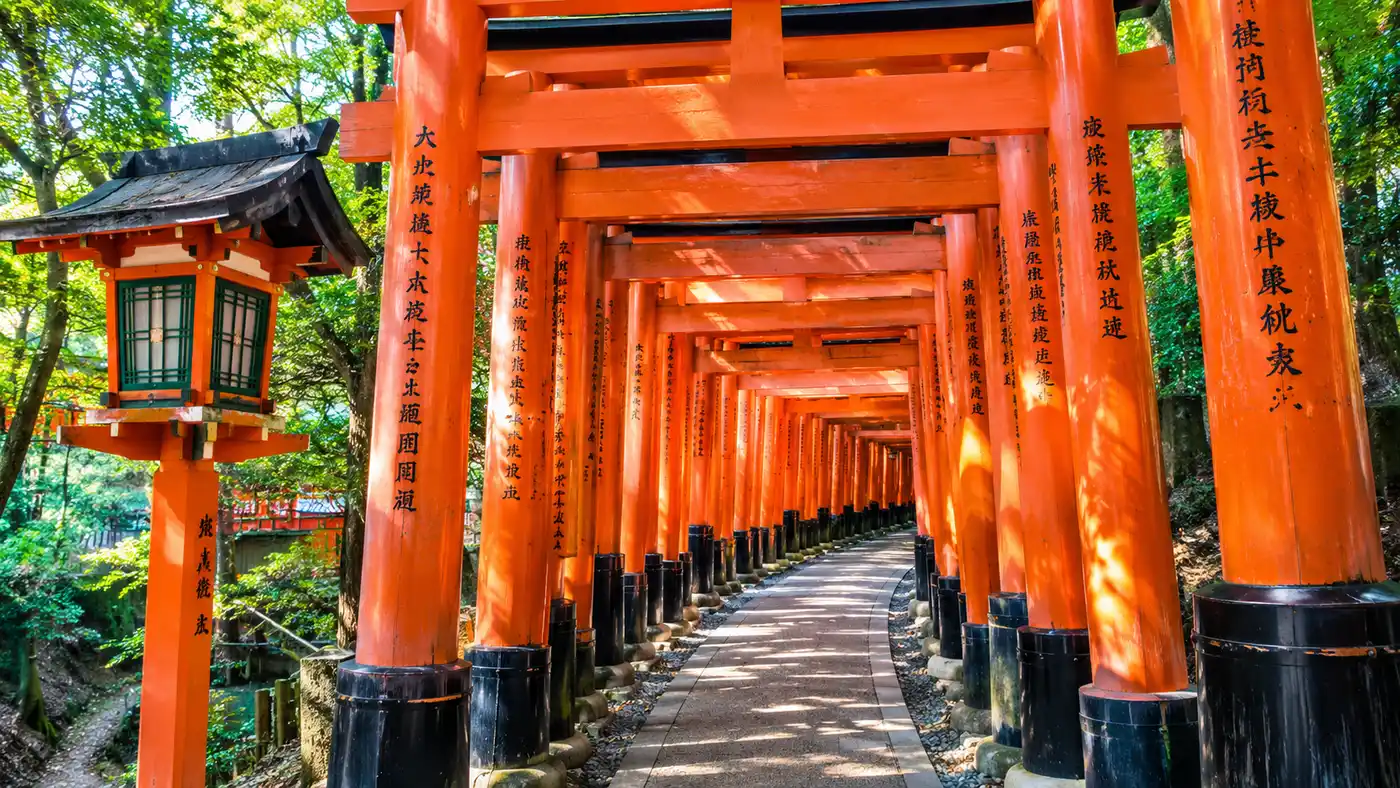
Explore Kyoto's iconic Fushimi Inari Taisha and its mesmerizing thousand torii gates. Get practical tips, hiking advice, …
Continue Reading →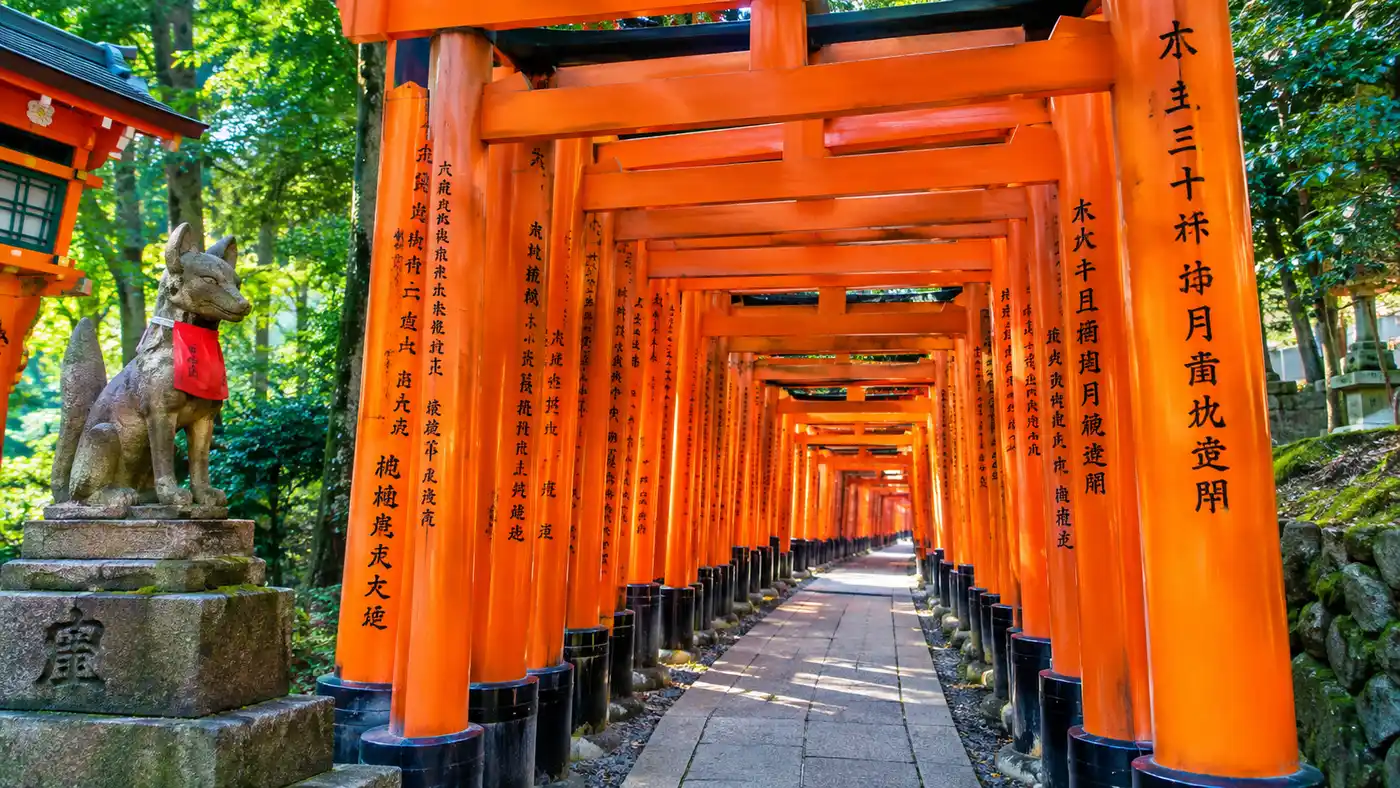
Discover amazing things to do near Fushimi Inari Taisha, from hidden temples and local food to cultural experiences and …
Continue Reading →Common questions about Fushimi Inari Taisha.
No, visiting Fushimi Inari Taisha is completely free of charge, including all the walking trails and main shrine areas. You can explore without any cost.
Walking to the summit of Mount Inari and back typically takes 2 to 3 hours, depending on your pace and how often you stop for photos or breaks. You can always turn back sooner if you wish.
The easiest way is by train. Take the JR Nara Line to Inari Station, which is directly opposite the main entrance. You can also use the Keihan Main Line to Fushimi-Inari Station, a short 7-minute walk away.
Yes, you'll find several small teahouses and vendors selling snacks, drinks, and even full meals, especially around the Yotsutsuji intersection and at the base of the shrine.
It can get very crowded, particularly mid-day and on weekends. For a quieter experience, aim for very early morning, around sunrise, or later in the afternoon, just before sunset.
Pets are generally allowed on the outdoor paths and grounds of Fushimi Inari Taisha, but please keep them on a leash and be respectful of other visitors and the sacred nature of the site. Always clean up after your pet.
Yes, there are several restroom facilities located at various points along the mountain trail, including at the main entrance, near the Yotsutsuji intersection, and close to some of the sub-shrines.
Dive deeper into Kyoto's spiritual heart. Your unforgettable journey begins here.